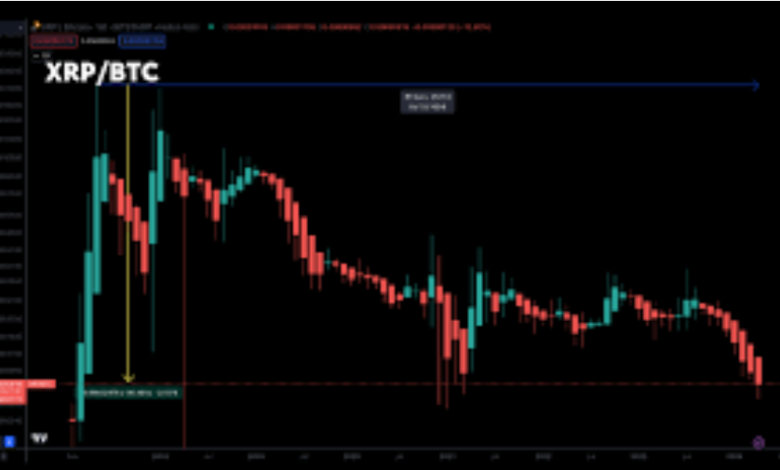
Cryptocurrency has emerged as a revolutionary force in the global financial landscape, with Bitcoin (BTC) and XRP leading the way in terms of popularity and adoption. While both are decentralized digital currencies, they have distinct characteristics, technology, and use cases. In this article, we will compare the XRP price and Bitcoin price, looking at their historical performance, technological differences, and market potential to help investors and enthusiasts better understand these two key players in the cryptocurrency space.
1. Understanding Bitcoin and XRP
Before delving into their price comparison, it’s essential to understand what Bitcoin and XRP represent in the crypto world.
Bitcoin (BTC)
Launched in 2009 by the mysterious figure Satoshi Nakamoto, Bitcoin is the world’s first cryptocurrency. It operates on a decentralized, peer-to-peer network known as the blockchain, which allows for secure and transparent transactions. Bitcoin’s primary use case is as a store of value and a medium of exchange, although its volatility often makes it more speculative than functional for day-to-day transactions.
Bitcoin’s scarcity (only 21 million BTC will ever be mined) and its status as the first cryptocurrency have cemented its position as the leader in the market. Its price has fluctuated over the years, but it has consistently been the most valuable cryptocurrency in terms of market capitalization.
XRP (Ripple)
XRP, developed by Ripple Labs, was launched in 2012 with a specific goal in mind: to facilitate fast, low-cost cross-border payments. Unlike Bitcoin, which is primarily seen as a store of value, XRP is designed for practical use in the financial sector. It acts as a bridge currency between different fiat currencies, making it ideal for international money transfers.
XRP operates on a consensus algorithm rather than the proof-of-work system used by Bitcoin. This allows it to process transactions much more quickly and with lower energy consumption, making it a more environmentally friendly option. Ripple has formed partnerships with various banks and financial institutions, which has contributed to XRP’s relevance in the financial sector.
2. Comparing XRP Price and Bitcoin Price
Historical Price Performance
When comparing the XRP price and Bitcoin price, it’s important to consider their historical price movements.
Bitcoin was the first cryptocurrency to gain widespread attention, and its price has experienced significant volatility over the years. From its humble beginnings, where it was worth less than a dollar, Bitcoin’s price skyrocketed to over $60,000 per coin in 2021, before experiencing a correction. Its price history has been characterized by periods of rapid price increases followed by sharp declines, a pattern that is typical for emerging markets.
XRP, on the other hand, has had a more stable price history compared to Bitcoin, though it has experienced its share of volatility. XRP reached its all-time high of around $3.84 in January 2018, driven by the excitement surrounding the broader cryptocurrency market and Ripple’s adoption by financial institutions. However, unlike Bitcoin, XRP’s price has not been able to maintain such highs, and it often experiences significant fluctuations in response to regulatory developments and changes in the overall crypto market.
Current Market Prices and Volatility
As of the latest data, the price of Bitcoin hovers around the $30,000 mark, though this can vary depending on market conditions. Bitcoin’s price has been more volatile compared to XRP, which can make it an attractive option for short-term traders seeking to capitalize on price swings. However, this volatility can also pose a risk for investors seeking long-term stability.
XRP, on the other hand, has a more modest price, typically trading under $1. While this makes it more accessible for investors with smaller portfolios, the price fluctuations of XRP are still considerable. In recent years, XRP has been heavily impacted by ongoing legal battles with the U.S. Securities and Exchange Commission (SEC), which has contributed to uncertainty regarding its price movement.
Market Capitalization and Liquidity
Market capitalization plays a crucial role when comparing cryptocurrencies. Bitcoin has the largest market capitalization by far, often exceeding $500 billion. This reflects its status as the leader in the cryptocurrency space, and its high liquidity means that large trades can be executed without significantly affecting the price.
XRP, although one of the top 10 cryptocurrencies by market capitalization, has a much lower market cap than Bitcoin. This can lead to higher price volatility and less liquidity compared to Bitcoin. However, XRP’s market capitalization has been buoyed by its use in cross-border payments and its partnerships with financial institutions, which give it a degree of stability that other cryptocurrencies may lack.
3. Factors Affecting XRP Price and Bitcoin Price
Several factors influence the price of both XRP and Bitcoin, though some factors are more specific to each cryptocurrency.
Bitcoin Price Drivers
- Market Sentiment and Media Attention: As the most well-known cryptocurrency, Bitcoin’s price is highly sensitive to market sentiment and media attention. Positive news, such as institutional adoption or regulatory clarity, can send the price soaring, while negative news can lead to sharp declines.
- Regulatory Developments: The regulatory landscape is one of the most significant factors influencing Bitcoin’s price. Countries around the world are grappling with how to regulate Bitcoin and other cryptocurrencies, and any regulatory news can impact its value.
- Institutional Investment: Bitcoin has attracted significant institutional investment in recent years, with companies like Tesla and MicroStrategy buying large amounts of BTC. This influx of institutional capital has contributed to Bitcoin’s price growth and increased mainstream adoption.
XRP Price Drivers
- Regulatory Impact: XRP’s price is particularly sensitive to regulatory developments, especially the ongoing legal case with the SEC. The outcome of this lawsuit could have a significant impact on XRP’s future price, as it would determine whether XRP is classified as a security.
- Adoption by Financial Institutions: Ripple’s partnerships with banks and financial institutions are key to XRP’s price. Increased adoption of XRP for cross-border payments can lead to higher demand for the cryptocurrency, which could drive its price up.
- Technological Developments: XRP’s ability to process transactions quickly and at a low cost is a key factor that differentiates it from Bitcoin. Technological improvements or upgrades to the Ripple network can positively influence the price of XRP.
4. Conclusion: Which is the Better Investment?
When comparing XRP price and Bitcoin price, it’s clear that both cryptocurrencies have unique qualities that appeal to different types of investors. Bitcoin, with its established market dominance and status as a store of value, is often seen as a safer investment in the volatile world of cryptocurrencies. However, its price can be highly volatile, and its transaction speed and energy consumption may be a concern for some investors.
XRP, on the other hand, offers a promising use case in the financial sector, with its focus on facilitating cross-border payments. While its price has been impacted by regulatory uncertainty, XRP’s lower price point and adoption by financial institutions make it an attractive option for those seeking exposure to the cryptocurrency market without the high volatility of Bitcoin.
Ultimately, the decision between investing in XRP or Bitcoin depends on an individual’s investment goals, risk tolerance, and belief in the long-term potential of each cryptocurrency. While Bitcoin remains the king of the cryptocurrency market, XRP’s unique use case and its role in transforming cross-border payments cannot be overlooked.