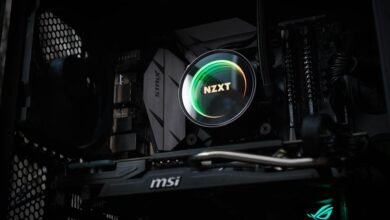
OmniCore Signal Station—identified by 18338858259, 2107644963, 8339014153, 6266390332, 67.207.72190—emerges as a modular, edge-friendly hub for real-time analytics and resilient communications. It emphasizes interoperable interfaces, observability, and governance-aware deployment. The identifiers encode lineage and protocol alignment to guide scalable, latency-aware routing. With cloud, hybrid, and edge-to-cloud data flows, it offers secure, fault-tolerant connectivity across networks. The discussion will explore how these traits shape deployment choices and future architectures.
What Is OmniCore Signal Station and Why It Matters
OmniCore Signal Station is a centralized communications and data-processing hub designed to manage and route high-priority signals in complex environments. It operates as a pragmatic backbone for operational autonomy, enabling rapid decision-making.
Edge resilience ensures local continuity, while data interoperability harmonizes diverse sources.
The system clarifies responsibilities, reduces latency, and supports scalable, secure collaboration across multiple networks and platforms.
Key Identifiers and Global Reach: Decoding 18338858259, 2107644963, 8339014153, 6266390332, 67.207.72190
Key identifiers and global reach underpin the OmniCore Signal Station’s ability to coordinate cross-border and cross-network operations. Decoding identifiers reveals lineage, ownership, and protocol alignment across networks.
Analyzing reach maps geographic dispersion, latency, and interoperability, highlighting how signals traverse diverse infrastructures. This framework informs strategic deployment decisions, ensuring scalable communication, resilient routing, and informed governance for globally distributed operations.
Core Capabilities: Real-Time Analytics, Fault-Tolerant Connectivity, and Seamless Interoperability
The core capabilities center on delivering real-time analytics, fault-tolerant connectivity, and seamless interoperability across heterogeneous networks. They enable independent data flows with governance in mind, ensuring data quality and lineage. Emphasis on latency optimization reduces delays, supporting responsive decisions. Architecture remains modular and observable, allowing scalable integration, risk mitigation, and freedom to innovate without vendor lock-in.
Deployment Scenarios and Next-Gen Architectures You Can Build With Omnicore
Deployment options with OmniCore enable modular, scalable architectures that leverage real-time analytics and resilient connectivity across diverse networks.
Deployment scenarios illustrate interoperable, edge-friendly deployments, cloud-integrated models, and hybrid deployments supporting rapid adaptation.
Next-gen architectures emphasize latency-aware pipelines and fault-tolerant cores.
The focus remains on deployment architectures and scalability strategies, ensuring secure, maintainable ecosystems while empowering operators with flexible, freedom-driven deployment choices.
Frequently Asked Questions
How Is Omnicore Signal Station Licensed Across Regions?
Licensed regions vary by jurisdiction, with cross border compliance and privacy implications guiding deployment. Disaster recovery and legacy integration influence architectural choices, while latency benchmarks define service levels, ensuring scalable, privacy-respecting operations across borders for freedom-minded stakeholders.
What Are the Privacy Implications of Real-Time Analytics?
The privacy implications center on balancing insights with safeguards. Data minimization limits exposure, privacy by design embeds protections, and data sovereignty governs jurisdictional control, ensuring real-time analytics respect user rights while maintaining operational transparency and accountability.
Can It Integrate With Legacy Telecom Networks?
The system can pursue integration readiness with legacy compatibility, enabling connection to older telecom networks. It secures structured interoperability, outlining clear interfaces and timelines for migration, while preserving autonomy and freedom in architectural choices for operators.
What Are the Typical Latency Benchmarks in Global Mode?
Latency benchmarks in global mode typically range from millisecond to tens-of-m milliseconds, depending on network conditions, routing, and satellite usage. In global mode, latency benchmarks emphasize consistency, predictability, and measured jitter, suitable for cross-border operational demands.
How Is Disaster Recovery Tested and Validated?
Disaster recovery testing demonstrates resilience, with validation procedures confirming failover effectiveness. It considers legacy network integration, privacy implications, and real time analytics, comparing latency benchmarks to ensure continuity; documentation clarifies roles, triggers, and corrective actions for freedom-minded stakeholders.
Conclusion
In a world of flawless uptime and universal interoperability, OmniCore Signal Station proves that truth is always somewhere in the network. Its gleaming identifiers whisper of precise lineage while real-time analytics quietly assure reliability. Fault tolerance? Of course. Cloud integration? Naturally. Yet the irony remains: even as systems promise seamless edge-to-cloud harmony, users still chase the last millisecond of latency. A gem of modularity, delivering certainty—one byte of elegance at a time.