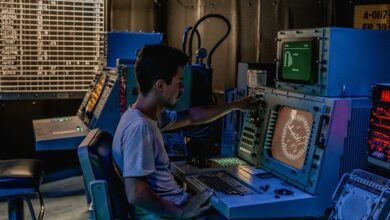
HelioPrime Coordination Console – 8605458003, 2066918065, 6198327374, 7193725912, 192.168.29.01


The HelioPrime Coordination Console coordinates real-time collaboration across distributed teams, anchored by the network address 192.168.29.01 and identified by 8605458003, 2066918065, 6198327374, and 7193725912. It offers centralized governance, resource allocation, and performance observability for operators, engineers, and analysts. The system supports autonomous decision-making within a unified framework while emphasizing resilience through modular failover and automated recovery. A disciplined approach to onboarding, security, and latency-aware performance invites further consideration.
What Is Helioprime Coordination Console and Who Uses It
The Helioprime Coordination Console is a centralized control interface designed to monitor and manage operations across the Helioprime system. It presents users with standardized tools to observe performance, allocate resources, and enforce governance.
Users include operators, engineers, and analysts who rely on cooperation metrics and workflow orchestration to align goals, optimize throughput, and sustain autonomous, flexible decision-making.
Real-time Collaboration Workflows Powered by 8605458003, 2066918065, 6198327374, 7193725912, and 192.168.29.01
Real-time collaboration workflows within the Helioprime system leverage a coordinated set of identifiers—8605458003, 2066918065, 6198327374, 7193725912, and 192.168.29.01—to synchronize tasks, allocate resources, and enforce governance across distributed teams. The approach fosters real time collaboration, balancing responsibilities and visibility. By assigning roles, they manage distributed workload, enable rapid decision cycles, and preserve autonomy within a unified orchestration framework.
How to Implement Resilient Failover and Smart Automation in Your Operations
How can organizations ensure operational continuity through resilient failover and smart automation? The approach emphasizes modular redundancy, automated recovery scripts, and continuous testing. It requires clear ownership, measurable SLAs, and real-time monitoring. Implement resilient failover by prioritizing critical paths and automated failback. Integrate smart automation to optimize workloads, reduce human error, and accelerate decision-making without sacrificing security or governance.
Best Practices for Onboarding, Security, and Performance Optimization
Onboarding, security, and performance optimization require a structured, repeatable approach that spans people, processes, and technology.
The guide emphasizes defined roles, clear onboarding checklists, and continuous security auditing across systems.
Implement scalable load balancing, proactive monitoring, and latency-aware configurations.
Documentation, governance, and regular reviews ensure consistency, reduce risk, and support freedom to evolve architectures while preserving reliability, security, and optimal performance.
Frequently Asked Questions
What Are the Hidden Costs of Helioprime Coordination Console?
Hidden costs include ongoing integration support and potential customization fees. The analysis suggests stakeholders should quantify maintenance, data migration, and interoperability requirements, ensuring budgets reflect long-term commitments beyond initial deployment. Planning prioritizes clarity, transparency, and sustainable adaptation.
Can It Integrate With Non-Standard Network Protocols?
Colliding silhouettes echo possible futures: integration challenges arise, yet the console can interface via protocol adapters with non-standard networks, if adaptable, disciplined engineers align layers. It remains cautious, prioritizing interoperability over bespoke convenience.
How Does Version Control Affect Collaboration Speed?
Version control accelerates collaboration speed by enabling parallel work, clear histories, and safe merges; however, hidden costs and offline mode limitations can delay recovery point objectives within the helioprime coordination console, especially when non standard network protocols are involved.
Is Offline Mode Supported for Remote Teams?
Offline mode is not universally supported for remote teams; some systems offer limited offline capabilities, requiring synchronization when connectivity returns. Detachment notes that functionality varies by tool, impacting collaboration speed, data integrity, and workflow continuity for distributed groups.
What Are Typical Recovery Point Objectives (RPO)?
Recovery point objectives vary by system, but typical targets range from minutes to hours, balancing data loss risk with cost. They reflect recovery objectives and contribute to data resilience across platforms and remote team workflows.
Conclusion
The HelioPrime Coordination Console knits dispersed teams into a single orchestration, where each identifier and address acts as a thread in a vast, resilient fabric. In this architecture, real-time collaboration becomes a disciplined symphony of automated recovery and smart governance. As operators, engineers, and analysts synchronize, the system endures like a lighthouse amid shifting tides—steady, scalable, and secure—guiding decision-making with precision while safeguarding performance and onboarding integrity.